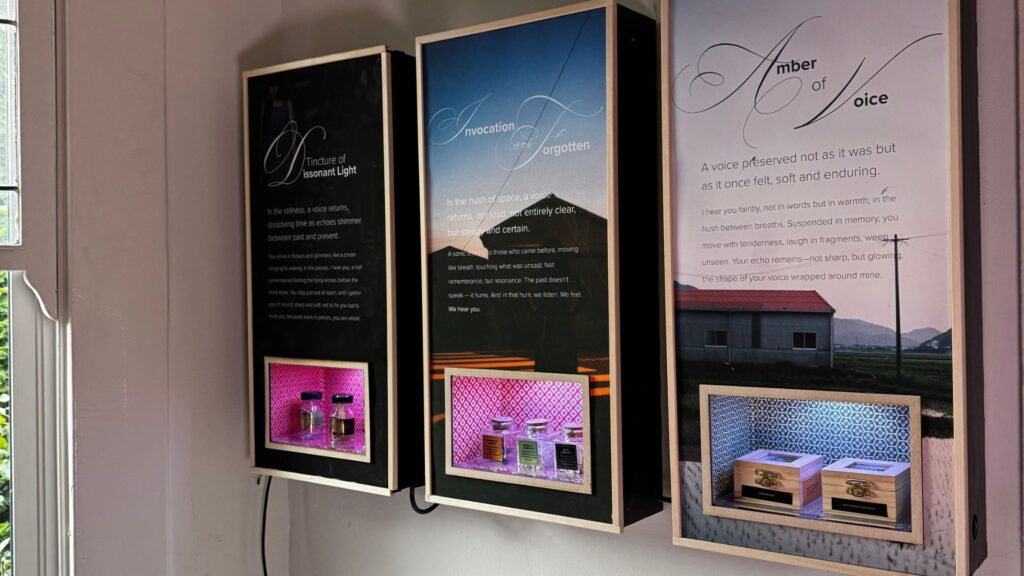
Lately, I’ve realized I need to focus on just one of the eight elements I’ve been exploring — and for now, that element is dreams. I’m carrying forward much of what I developed in the last project, refining it so that the physical structure — the box — becomes interchangeable. I want to be able to remove the face and experiment with different forms of interaction.
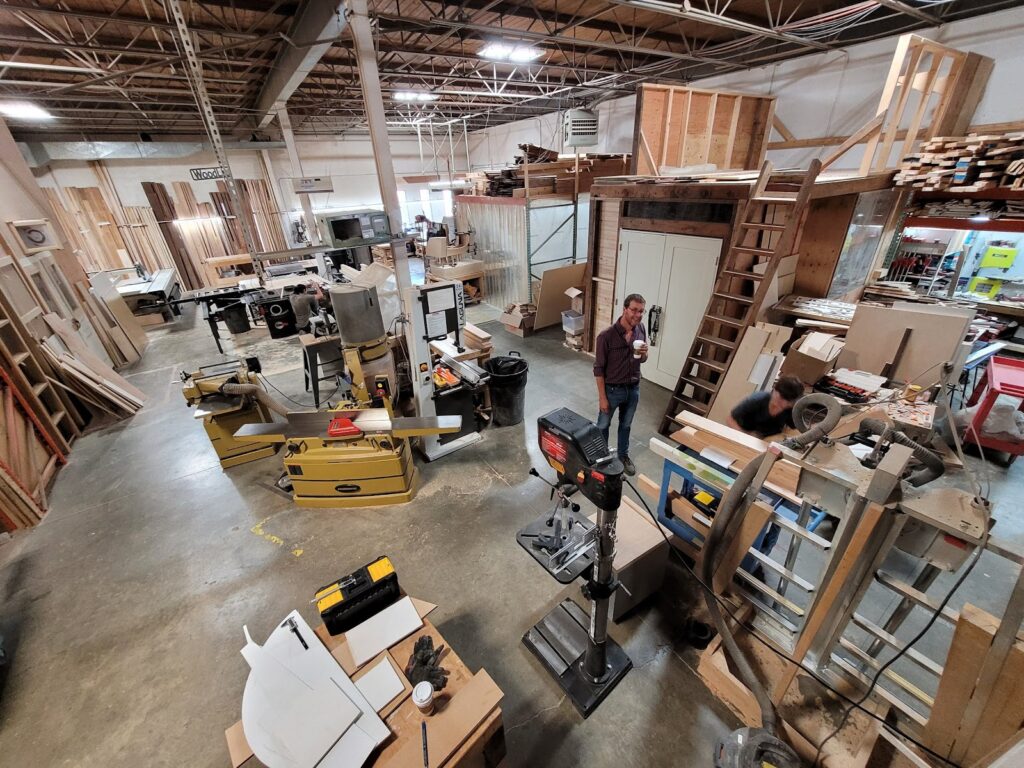
I’m not entirely sure where to begin, so maybe the best first step is simply to head to Home Depot, choose the wood, and start building. I love finger joints, so I’ll figure out how to cut the outer box with the CNC router. I bought 1/2 Inch AND 1/4 inch plywood. I am just starting to understand soft wood and chose the cheapest PLUS I think the pieces looked better than birch.
This version will differ slightly from the earlier boxes. I’ll bring the screen closer to the front, creating a more immediate and immersive viewing experience and the box is alot bigger so that I can put USB powered speakers inside.
Musically, I’ll begin by building the stems of my song — layering textures of voice, violin, and ambient sound that can later connect to the interaction. Photoresistors will detect shifts in light and trigger corresponding sounds or visual changes, forming a subtle connection between movement, illumination, and tone.
Each 3D-printed object (which will come later) will hold a sound element — a tone, resonance, or texture — that becomes part of the overall composition when light shifts or objects are moved. I’ll explore how these fragments of sound relate to form: which sounds belong to which shapes, and how each object might tell a small piece of the larger dream.
The experience will be quiet and intimate. The participant will sit and watch the looping video, then pick up and look at the 3D-printed objects that serve as MIDI triggers. Each object contains a fragment of the story, inviting exploration that feels instinctive and intuitive — like tracing the edge of a memory that almost makes sense.
INSTALLATION SPECIFICATIONS
MAIN OUTTER BOX
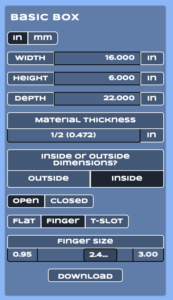
Width: 16 Inches (created for speaker width)
Height: 22 Inches
Depth: 6 Inches
1/2 Inch Wood
It needs holes for the speakers. If I cut dados (grooves) in the sides for shelves, they can be interchangeable.
Alternatively, the inner box could be a complete box structure mounted on slides, allowing it to move in and out like a drawer. This can either be cut on the CNC machine or in the wood shop. The face panel will slide up and down, depending on the interaction design.
The face is flat so that there is a mechanism to slide the face up and down.
SPEAKERS
(USB Computer Speakers,Wired PC Gaming Sound Bars with RGB Light,3.5 mm Jack AUX Plug in External Monitor Speaker for Desktop,Laptop,Plug and Play)
Width: 15.0 inches
Height: 7.5 inches
Depth: 2.7 inches
NOTE: They are powered by USB The speaker can sit on a shelf and the cords can go down the right side and hook into the computer.
INNER BOX
Width: TBD
Height: TBD
The inner box sits on drawer slides so the entire structure can be pulled in and out. Leave space on the sides for cords and wiring.
SCREEN
(FEELWORLD FW759 7 inch Slim DSLR Camera Field Monitor HD Video Assist IPS 1280×800 4K HDMI AV)
Width: 176 mm (6.9 inches)
Height: 130 mm (5.1 inches)
Depth: 17 mm (0.67 inches)
NOTE: Uses power and will be plugged into the cord inside the box
COMPUTER
(Apple Mac mini)
Width: 5 inches
Height: 5 inches
Depth: 1.75 inches
NOTE: Uses power and will be plugged into the cord inside the box
ARDUINO
Width: 45 mm (1.77 in)
Height: 18 mm (0.7 in)
NOTE: This needs space around it and will sit on the same level as the computer
BREADBOARD
NOTE: This sits underneath the photosensors and gets wired up to the arduino
Other Things I might need…
Drawer Slides
- URBEST Ball Bearing Drawer Slides Full Extension 6 Inch Telescopic Slider for Cabinet, 1Pair (6-Inch)
- 5 Inch Full Extension Drawer Slides Mini Ball Bearing Mount Drawer Slide for Cabinet Short Drawer Slides 1 Pair Black (Pack of 2)
Plans
Fancy Legs for the Pedestal (podium)
Dream — Between Conscious and Subconscious
Time loosens its grip. Sound folds over itself like sleep breathing through memory, where pulse becomes tempo and stillness becomes song.
A participant sits on a chair before the installation — a pedestal holding a softly looping video. In front of it rest curious, dreamlike objects, each inviting touch and discovery, creating a quiet dialogue between body, sound, and light.
Interaction
- Photo sensors embedded beneath or behind each object detect when it is lifted or replaced.
- When an object is removed, it triggers a random video fragment, forming a nonlinear dreamscape projected within the installation.
- When returned, the scene dissolves back into the ambient loop — sound and image merging into stillness once more.
Experience
The visitor becomes both observer and instrument, their pulse and breath entwined with the sounds of the dream objects and the shifting play of light and image. As each object is touched or lifted, its embedded tones are recorded, looped, and remixed in real time, merging with layers of voice, violin, and ambient rhythm.
The installation becomes a living composition, continually rewritten by human presence — a space where the conscious and subconscious fold into one another. Each moment is fleeting, unreproducible, like the logic of dreams: familiar, fluid, and always on the verge of dissolving back into silence.
Objects
3D-printed dream totems serve as tangible anchors to the subconscious — tactile symbols of half-remembered visions. Each object feels both familiar and impossible, like fragments of a dream trying to surface.
Embedded within each form are tiny sound elements — chimes, resonant tones, or recorded whispers — that awaken when touched or moved. These sounds are captured by a recorder or sensor system, which mixes them live into the evolving composition, folding each object’s unique timbre into the overall soundscape or song stem.
Possible forms include:
- A melted timepiece, echoing the slow collapse of time
- A hollow heart filled with delicate chimes that stir with motion
- An eye-like vessel that glows and hums softly when lifted
- A hybrid creature, part coral, part bird, producing a faint, resonant tone when touched
Together, these objects create a living orchestra of dreams — their sounds blending with the participant’s heartbeat and breath, forming a constantly shifting, intimate composition of memory, sound, and touch.
Visuals
Soft, ambient light emanates from within the pedestal, creating a dim, dreamlike atmosphere. A looping video plays continuously — a slow stream of abstract imagery that drifts between color, shadow, and form. When a participant lifts or moves an object, the photo sensors trigger new visual layers: fleeting scenes, dissolving landscapes, and fragments of dreams that appear and fade in unpredictable rhythms.
Each video fragment responds to the soundscape’s evolution, pulsing and morphing in sync with the visitor’s heartbeat and breath. Light and motion become extensions of sound — color fields shimmer in response to high frequencies, while shadows expand and contract with the lower tones of the mix.
The result is a nonlinear visual dreamscape — a quiet choreography of light, image, and motion that blurs the boundary between the real and the imagined, mirroring the body’s own rhythm of waking and sleep.